

by John Mark Shaver FAIRMONT NEWS EDITOR

FAIRMONT, W.Va. — Last month, Gov. Patrick Morrisey directed state agencies to collaborate on a bid for the Pentagon’s “Next Great American Base,” a large-scale development that West Virginia High Technology Foundation President and CEO Jim Estep believes would be a perfect fit for the Mountain State.
After announcing Sept. 30 that states could submit bids for the proposed base, the U.S. Department of War released the project’s criteria. The base must be located within the continental United States, and the selected site must have between 100,000 and 250,000 contiguous acres.
The base would support between 15,000 and 25,000 active-duty military members.
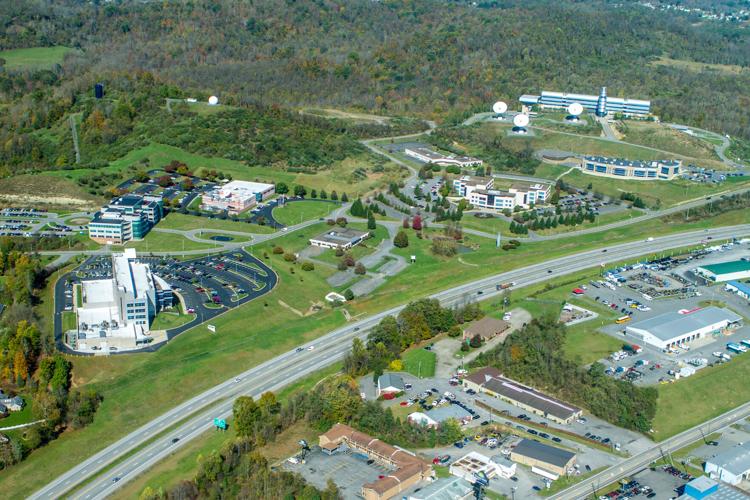
Estep, whose organization oversees the I-79 High Technology Park in Marion County, has long advocated for attracting federal anchors to the state. He said a military base of this size would be a perfect fit for southern West Virginia.
“One of the most significant factors, in my opinion, is the availability of natural gas in the state and Appalachia in general that could be used to drive self-sustaining power at this military base,” Estep said. “Self-contained power generation at these bases is a major important factor. There’s virtually no other place in the country that provides the same potential for redundant self-sustaining power thanks to our natural gas reserves.”
Estep argued that a large military base in southern West Virginia would be far enough from Washington, D.C., that it likely would not be affected by an act of war against the capital, while remaining close enough for forces to mobilize quickly if necessary.
He added that West Virginia has enough space to meet the proposed base’s substantial acreage requirements.
“Unfortunately, we’ve had such a huge population decline in southern West Virginia that there’s a lot of available land, but the other factor to consider is major parcels of land in southern West Virginia are owned by coal companies or timber companies,” he said. “If you’re looking for a site to pull together something like 200,000 acres, southern West Virginia creates a very expeditious and efficient place to pull together that kind of site.”
Although Estep believes locating the new military base in West Virginia would be a major benefit to the U.S. armed forces, he said the state also would stand to gain significantly from attracting such a large project.
First, he said, the project would bring an “unprecedented” number of construction and mechanical jobs to the area, spurring additional economic development. Beyond the construction phase, Estep said, the number of people employed at the completed base could be enormous.
“It could actually dwarf the highest employment we’ve ever had in the coal sector,” Estep said.
He argued that the base also would bring lucrative contracting opportunities and supporting industries, further increasing the economic impact of a large military presence in southern West Virginia.
“It would attract an entire new sector of jobs; not only knowledge sector jobs, but all types of other industries will be attracted to the region,” he said. “There would be a bunch of tangential economic opportunities. … Having that military base in West Virginia would transform the state in short order.”
Morrisey’s office said the West Virginia National Guard, West Virginia Office of Economic Development and Department of Environmental Protection are coordinating on the bid and evaluating potential sites, needs and requirements.
Bids for the project are due Dec. 1, and the U.S. Department of War anticipates selecting a site by June 2027.
Fairmont News Editor John Mark Shaver can be reached at 304-844-8485 or jshaver@theet.com.
Article as originally published by The State Journal on October 30, 2026.